
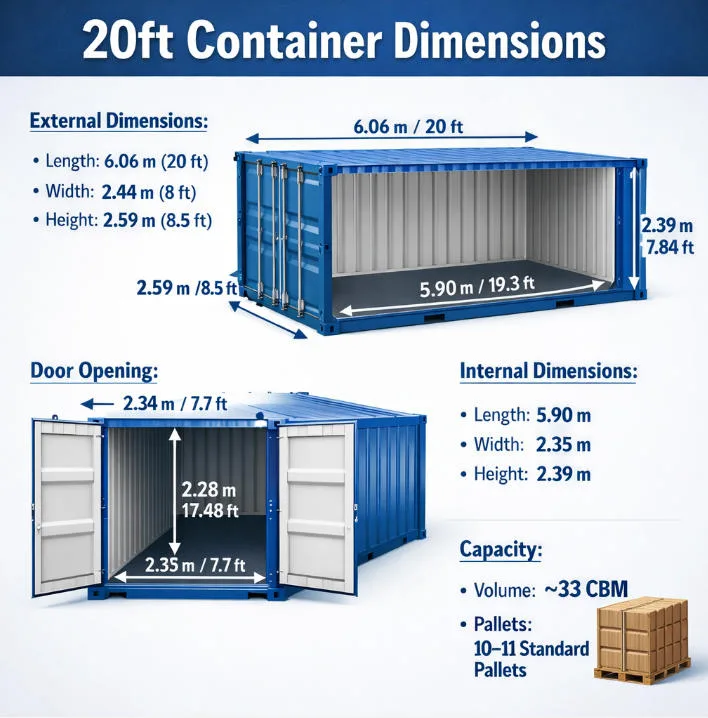
Container Tiering and Dimensions
When planning a commercial logistics deployment, an on-site industrial storage yard, or a modular architectural project, choosing the right size is the most critical first step. While the global shipping market relies primarily on the ubiquitous 20-foot (TEU) and 40-foot standards, intermediate sizes like the 30-foot container fill specialized niches.
This guide breaks down the physical dimensions, structural specifications, and ideal applications for 20ft, 30ft, and 40ft shipping containers to help you make an informed investment.
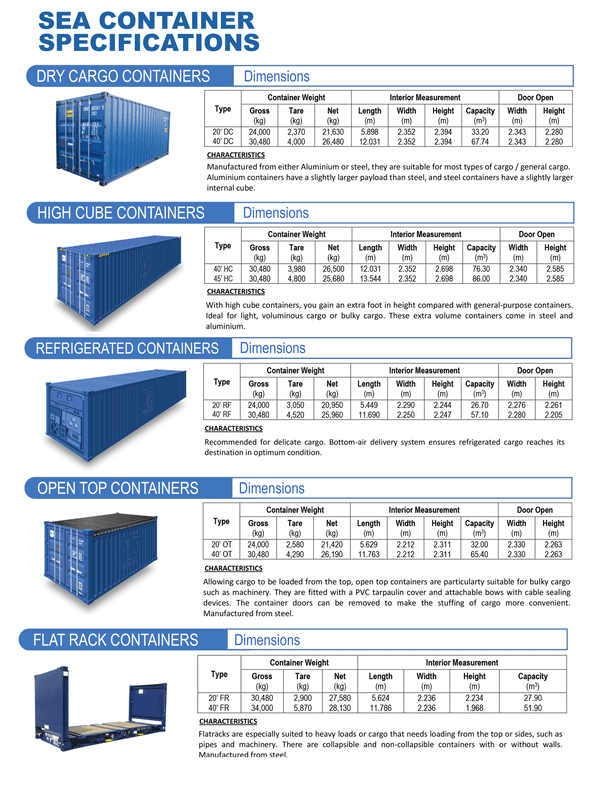
2. The 30-Foot Shipping Container: The Specialty Custom Size
Unlike 20ft and 40ft units—which are mass-produced straight off international assembly lines—standard 30ft containers are typically custom-fabricated (cut-down from 40ft units) or built as specialized regional assets.
- External Dimensions: 30′ long x 8′ wide x 8’6″ high (Standard) or 9’6″ high (High Cube).
- Internal Floor Area: Roughly 227 square feet.
- Cubic Capacity: ~1,760 cubic feet (Standard).
- Tare Weight: Approximately 6,400 lbs (2,902 kg).
- Best Uses: Agricultural or construction storage requiring extra length for items like scaffolding, piping, or long materials where a 20ft is too short, but space constraints prevent a 40ft footprint.
3. The 40-Foot Shipping Container: The Logistics Workhorse
The 40ft container dominates international maritime freight lanes and large-scale industrial warehousing. It provides maximum floor space per unit cost.
- External Dimensions: 40′ long x 8′ wide x 8’6″ high (Standard) or 9’6″ high (High Cube).
- Internal Floor Area: Roughly 305 square feet.
- Cubic Capacity: ~2,360 cubic feet (Standard).
- Tare Weight: Approximately 8,000 lbs (3,620 kg).
- Best Uses: Multi-room container homes, commercial site offices, bulk inventory warehousing, and long-haul intermodal shipping.
Comparison Table: 20ft vs. 30ft vs. 40ft
| Size | External Length | Floor Area | Standard Capacity | Primary Advantage |
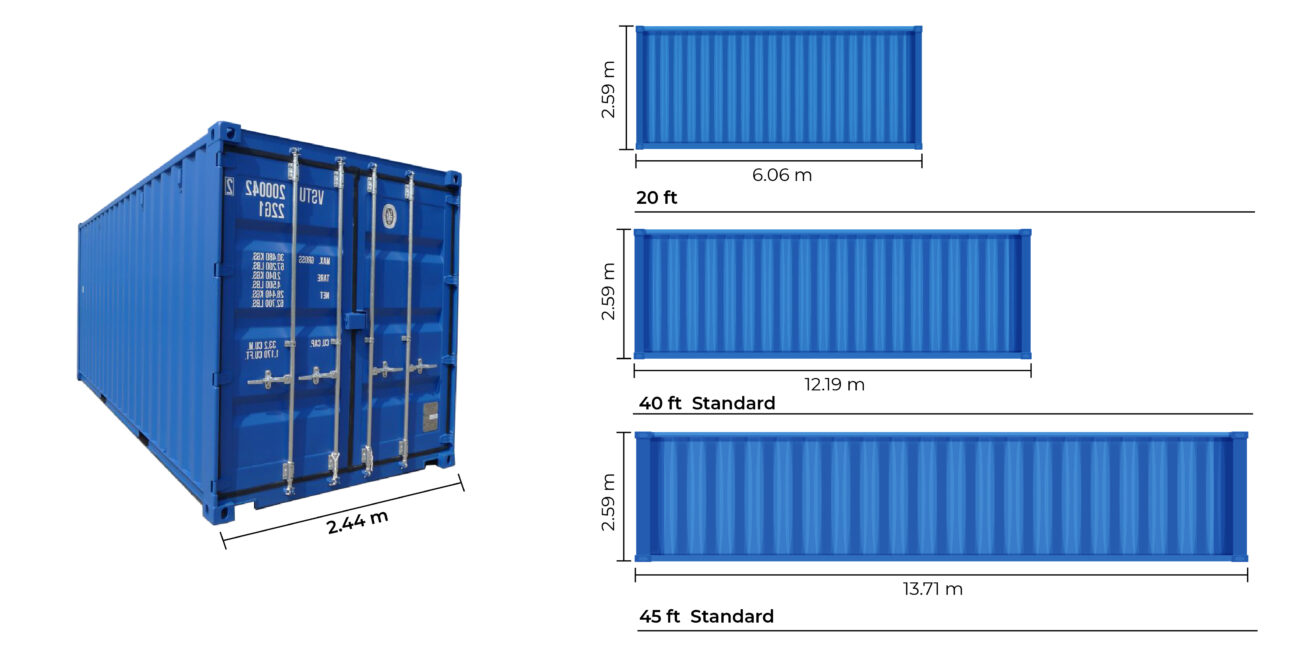
| 20-Foot | 20 ft (6.06 m) | 150 sq ft | 1,160 cu ft | Maximum portability and widespread availability |
| 30-Foot | 30 ft (9.14 m) | 227 sq ft | 1,760 cu ft | Perfect middle-ground for restricted space vs. length |
| 40-Foot | 40 ft (12.19 m) | 305 sq ft | 2,360 cu ft |
Conclusion
Choosing between a 20ft, 30ft, or 40ft container boils down to balancing your spatial footprint constraints against your volumetric storage needs. While 20ft and 40ft options offer standard mass-market pricing, the 30ft variant bridges the gap for unique site dimensions.